For years, marketplaces were built as monoliths: the interface and the backend logic were welded together. That model does not survive an era of fast innovation and many touchpoints.
In a LinkedIn article, I looked at the move toward headless marketplaces and why it is a business decision rather than a technical detail.
Beyond the web template
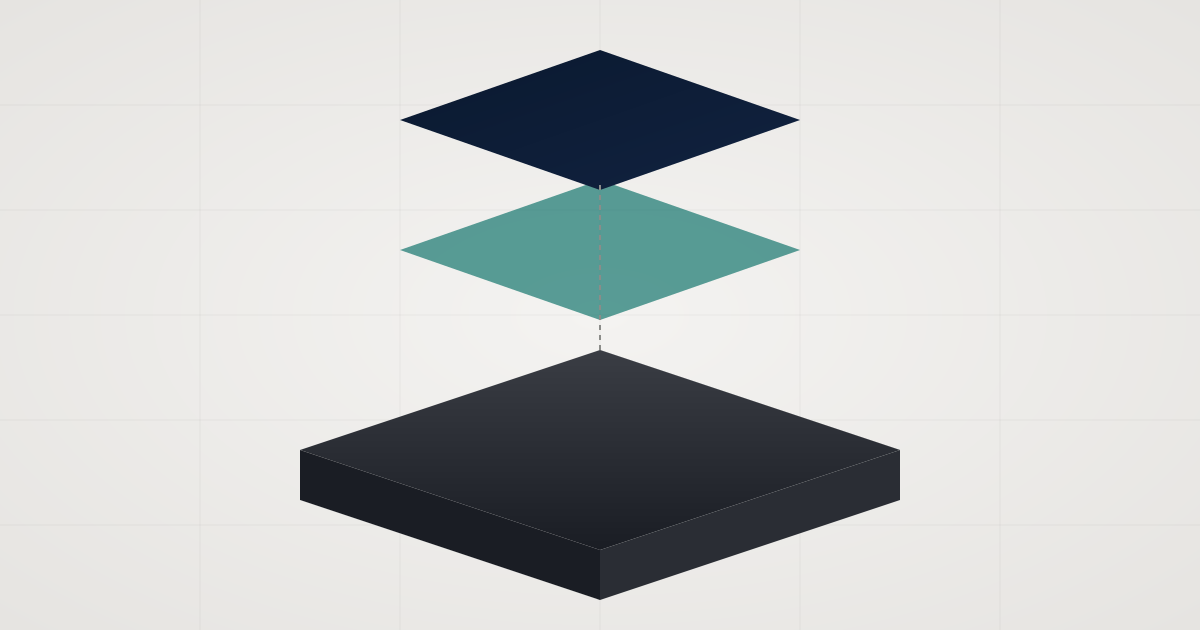
A headless approach decouples the frontend (the "head") from the backend logic (the "body"). For a marketplace, that means your core functions - search, vendor management, checkout, and payments - sit behind APIs.
This lets organizations:
- Deploy everywhere: deliver marketplace features to mobile apps, IoT devices, in-car displays, and AI agents without rebuilding the core.
- Integrate best-of-breed: use the right tool for each job, like Algolia for search or commercetools for commerce, instead of locking into one suite.
- Move faster: update the experience instantly without risking backend stability.
The strategic shift
For leaders, headless is not a technical term - it is a way to move faster. It turns processes into digital products any system can consume in the API economy.
More "users" will be AI agents talking through protocols, not humans clicking buttons. A headless architecture keeps you available to both.
Read the full discussion on LinkedIn.